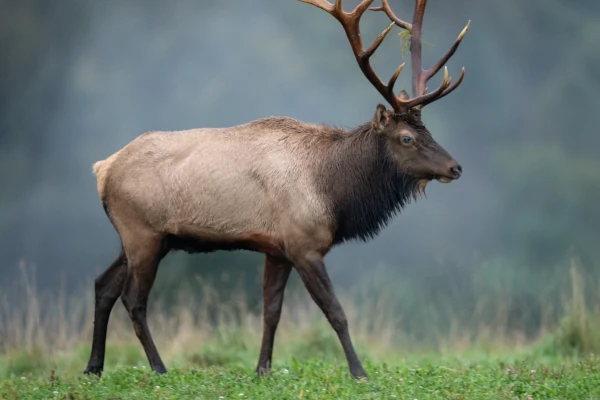
Elk-resistant landscaping is a must for many Flagstaff homeowners. You plant new shrubs and flowers in the spring, and within weeks, elk have chewed them down to stubs.
Elk are part of life here, and they aren’t going anywhere. The good news is that your yard can still look great. No plant is completely elk-proof, but the right plant choices, a smart layout, and a little protection in the right places go a long way.
In this guide, we’ll cover which plants local gardeners say elk usually leave alone, which ones to avoid, and how to design a yard that holds up to hungry wildlife.
Why "Elk-Proof" Doesn't Exist
You’ll find plenty of “elk-proof plant” lists online, but no plant is truly safe. Elk eat grasses, shrubs, and flowering plants, and what they choose changes from year to year.
According to the University of Arizona Cooperative Extension, elk diets shift based on how much wild food is available, along with rainfall and temperature. A plant they ignore during a wet year may become a target in a dry one. Young plants and well-fertilized plants are also more appealing to them.
That’s why the smartest approach isn’t finding one perfect plant. It’s stacking the odds in your favor.
Plants Elk Usually Leave Alone
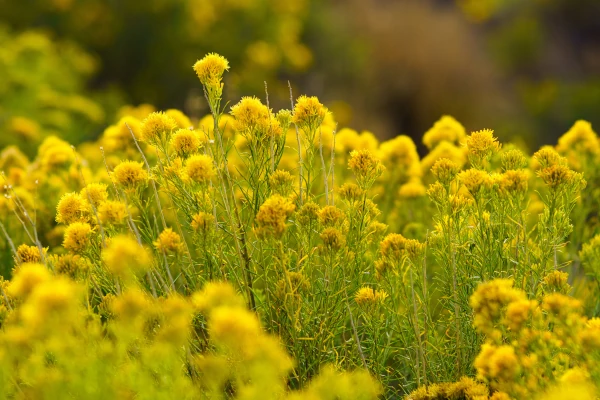
 In 2025, the University of Arizona Cooperative Extension surveyed Master Gardeners in Flagstaff, Payson, and Yavapai County, along with published research, to see which plants elk tend to skip. These plants were most often reported as rarely or never damaged:
Shrubs
- Russian sage
- Apache plume
- Rabbitbrush
- Oregon grape
- Mugo pine
Perennials
- Lavender
- Yarrow
- Catmint
- Coneflower
- Lamb’s ear
Bulbs
Lavender stood out with the most reports behind it. Nearly 9 out of 10 sources said elk rarely or never damage it.
Keep in mind that these ratings show likelihood, not guarantees. A hungry elk in a dry year may still take a bite. Planting several of these together gives you the best chance of a yard that stays full and healthy.
Plants to Skip or Protect
Some plants show up again and again in reports of elk damage. If you love them, you can still plant them, but plan to protect them or place them where elk can’t easily reach.
These were reported as sometimes or frequently damaged:
- Quaking aspen: reported as frequently and severely damaged
- Forsythia: consistently reported as sometimes damaged
- Spruce: damaged in most reports
- Chokecherry: mixed reports, with some severe damage
- Roses and tulips: reported as sometimes damaged
Young trees are especially vulnerable. Until they’re established, a wire cage around the trunk and lower branches can make the difference between a tree that thrives and one that never recovers.
Design Moves That Reduce Browsing
Plant choice is only part of the solution. How you lay out your yard matters just as much.
Start by keeping your favorite plants close to the house. Courtyards, entryways, and enclosed spaces are easier to watch and protect, so save your most vulnerable plants for those areas.
Boulders and stone can also help. Large rocks, retaining walls, and terraced beds break up open space, making it harder for elk to wander through and graze freely. Stone pathways, gravel beds, and patios add another advantage: they look great year-round and give elk nothing to eat.
Finally, think about how you arrange your planting beds. Placing tougher plants like Russian sage and lavender along the outer edges helps shield more tempting plants inside.
A well-designed landscape doesn’t fight wildlife. It works around it.
When Fencing Is the Answer
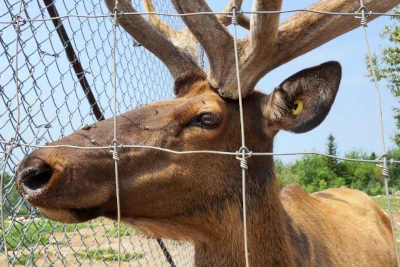
 If elk pressure is heavy on your property, fencing is the most reliable protection. The University of Arizona Cooperative Extension calls exclusion the best way to keep elk away from your plants.
Height matters. Fences designed to keep out deer and elk need to be at least eight feet tall and sturdy enough to hold up. For many homeowners, fencing a smaller area, like a vegetable garden or a new planting bed, is more practical than fencing the whole yard.
Before you build, check local rules. Fence height limits and permit requirements vary, and HOAs often have their own restrictions.
Build a Yard That Works With Flagstaff Wildlife
You don’t have to choose between a beautiful landscape and living alongside elk. With the right plants, a smart layout, and protection where it counts, your yard can thrive year after year.
Contact Stix & Stones today for a free estimate on a landscape built for Flagstaff.

 In 2025, the University of Arizona Cooperative Extension surveyed Master Gardeners in Flagstaff, Payson, and Yavapai County, along with published research, to see which plants elk tend to skip. These plants were most often reported as rarely or never damaged:
 If elk pressure is heavy on your property, fencing is the most reliable protection. The University of Arizona Cooperative Extension calls exclusion the best way to keep elk away from your plants.